What leaders are actually worried about
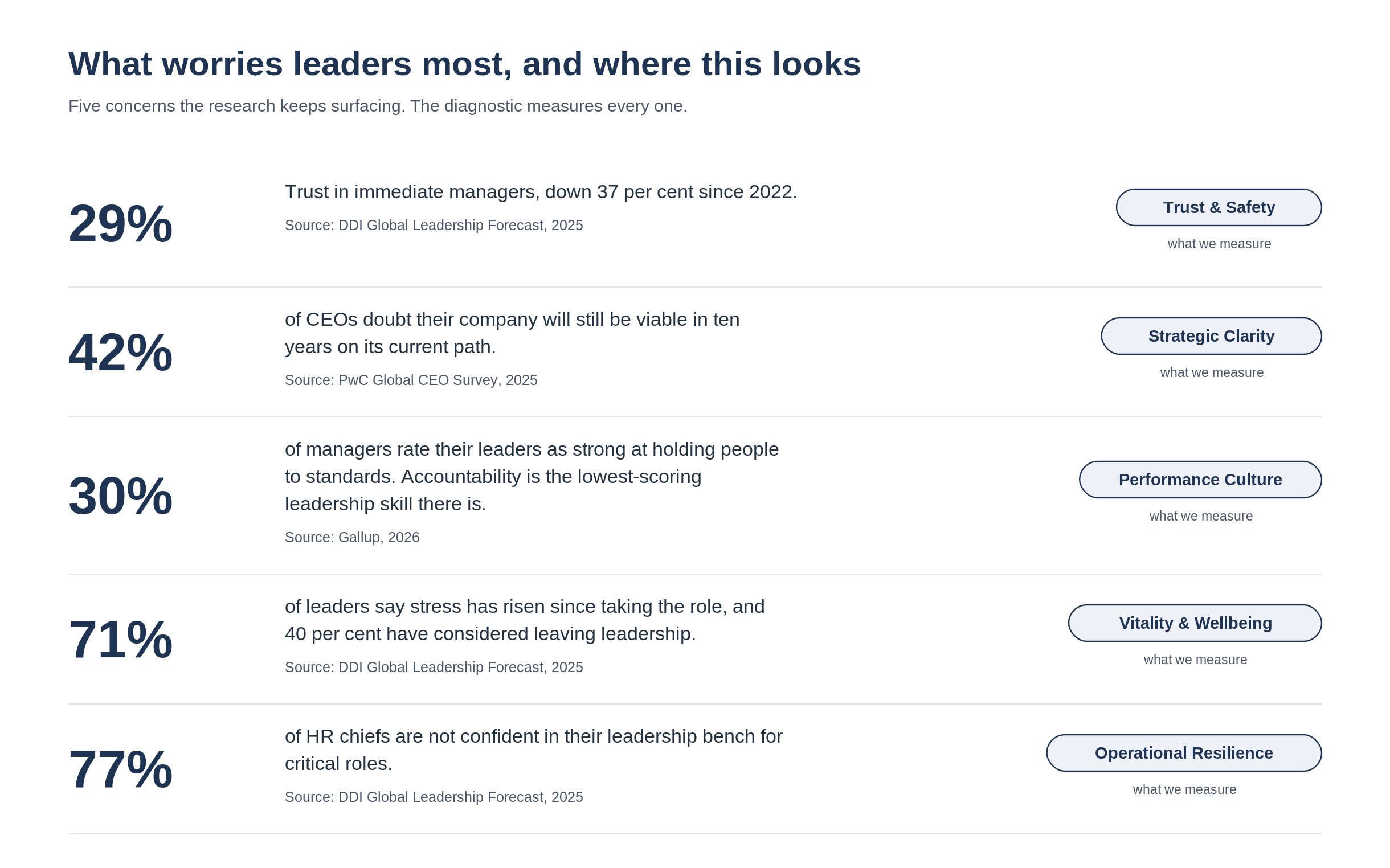
These are the concerns the research keeps surfacing. The diagnostic measures every one of them.
The togetherness is real. The energy is real. Then Monday's inbox and the meeting schedule land, and within a fortnight it has quietly drained away. Sound familiar? I spent thirty years in elite sport, where we would never let that set in. So I built a diagnostic that shows a leadership team where to aim and what to fix first. Take the quick version and try it.
It isn't aimed at anything. A team goes off-site and works on whatever felt urgent that week, with no real read on where the weak spots are. If you want development to land, you profile the team first, act where it counts, then profile again to see whether anything moved. That is how we worked in elite sport. Measure, intervene, measure.
These are the concerns the research keeps surfacing. The diagnostic measures every one of them.
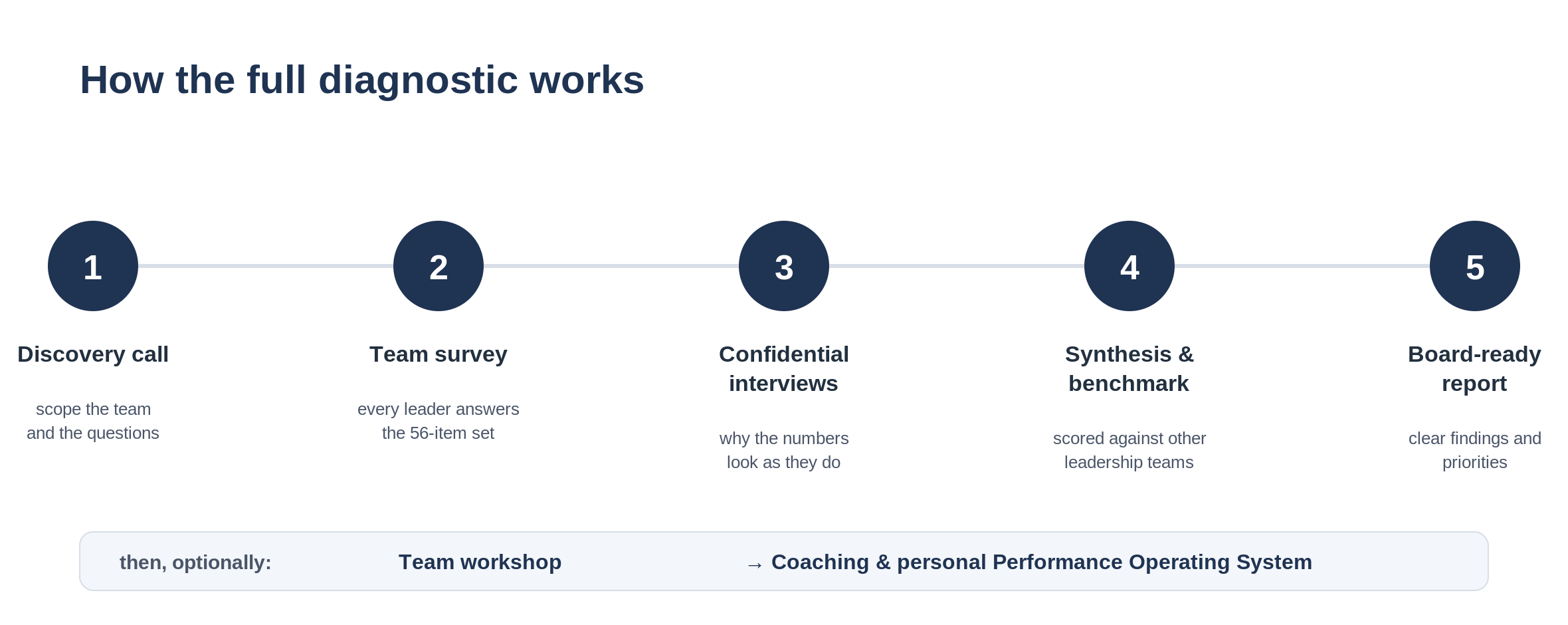
Five steps, from the first call to the final report.
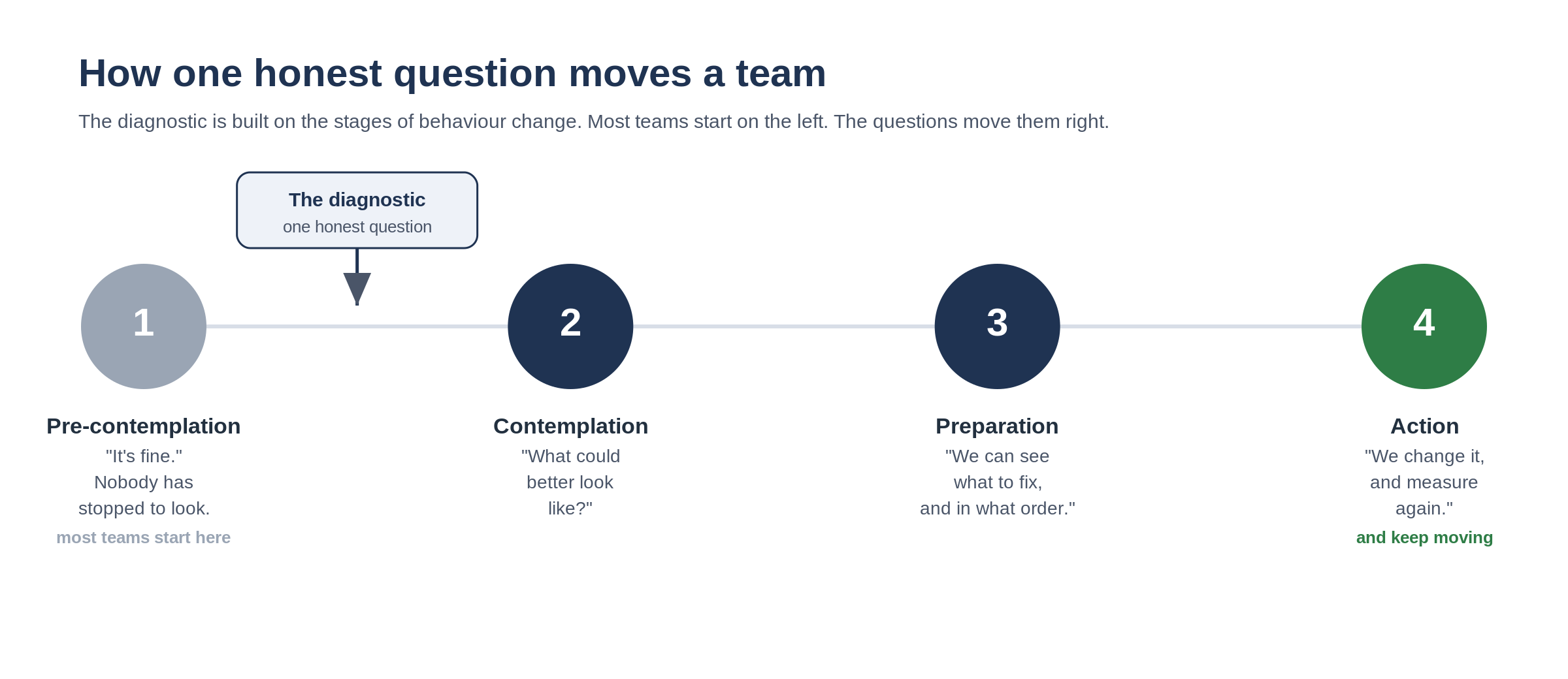
Most measurement just takes a reading. These questions do more than that. Answering them honestly drags the things a team has been quietly avoiding into the open, and it gets people asking what a properly good version of this team would look like. The measuring is where the change begins.
That is deliberate, and it is the half of my work people forget. Behaviour change is as much my field as physiology. Most teams sit in what the science calls pre-contemplation, where everything is assumed to be fine because nobody has stopped to look. A good question moves you out of that, into the moment where you start to weigh what is possible. The survey does more than take a reading. It gives the first nudge.
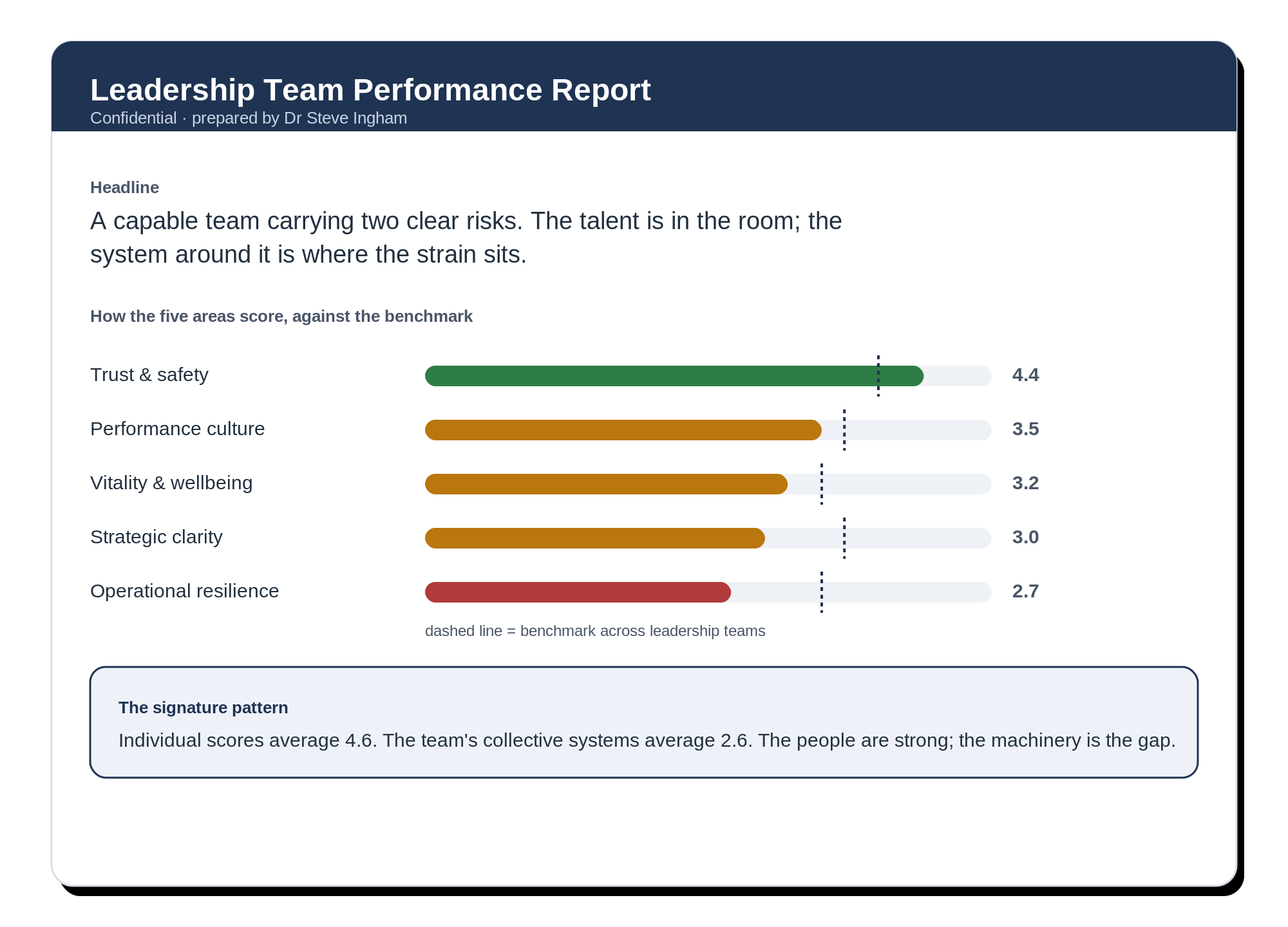
Twelve questions, three minutes, and a straight red-amber-green read across the five areas that decide how a team performs.
For any leader who wants an honest look, today.
Every leader answers the whole set. I interview the team in confidence to find out why the numbers look as they do, benchmark you against the other leadership teams I measure, and write it up for your board.
For a team that wants to know exactly where it stands.
We fix what is weak, then measure again, so the change shows up in the same numbers you started with. Coaching and the personal performance work sit alongside it.
For a team ready to do something about what it finds.
A report you can put straight in front of a board or an investment committee. Real numbers, set against the other leadership teams I measure, written in plain English, with the two or three things to fix first.
I ran the science behind more than two hundred Olympic and World medals, then brought the same systems into boardrooms. This is applied performance science, delivered by the person who did the applying.
The physical base underneath performance, which almost every leadership programme skips, and the part I know better than anyone. A team running on empty cannot be fixed with strategy.
Your team set against the other leadership teams I measure, so you get a position rather than an opinion. Very few people can give you that.
It is a structured, evidence-based diagnostic. The five areas draw on established research, for example the trust and safety measures build on Amy Edmondson's work on psychological safety. Each area is measured with several questions rather than one, and I test the internal reliability of those questions, so I know they really are measuring the same thing. It is a rigorous, reliability-tested instrument, benchmarked against other teams. It is not a clinically validated psychometric test, and I would rather under-claim and let the rigour speak.
An engagement survey tells you how people feel. This tells you how the team performs, across the areas that decide output, and it benchmarks you against other leadership teams. It includes the physical base underneath performance, which staff surveys never touch.
Yes, and that is by design. The questions are written to raise awareness and get people thinking, as much as to record where they are. In behaviour-change terms it moves a team from pre-contemplation, where nobody is thinking about the issue, into contemplation, where they start to consider what is possible. The measurement is the start of the change rather than a snapshot separate from it.
The full survey takes each leader ten to fifteen minutes, and your whole leadership team completes it, usually six to fifteen people. The free check is twelve questions and about three minutes, for one person to get a quick read.
Yes. Individual answers are never shared. Results are reported as team-level patterns, and interview comments are used only as anonymous themes, never attributed by name.
Yes. For a private-equity firm or a group, the diagnostic runs across several leadership teams, with a benchmark specific to your portfolio. Book a call and we will scope it.
Three minutes, and it will tell you something true about your team. If you want the full picture, you will know where to find me.